Ketamine vs TMS Therapy: Which Is Right for You?
Comparing IV ketamine and Exomind TMS therapy for depression, anxiety, PTSD, and OCD. Learn how each works, what conditions they treat, and how to choose the right option at Physicians Ketamine Institute of Destin, FL.
Why Patients Struggle to Choose Between Ketamine and TMS
If you've been researching advanced treatments for depression, anxiety, PTSD, or OCD, you've likely encountered two names that keep coming up: ketamine infusion therapy and transcranial magnetic stimulation (TMS). Both represent a new generation of treatments that go beyond traditional antidepressants and talk therapy — and both have substantial clinical evidence behind them.
But they work in fundamentally different ways, treat different (though overlapping) conditions, and follow very different treatment timelines. Choosing between them isn't always straightforward, and the right answer depends on your diagnosis, your treatment history, and how quickly you need relief.
At Physicians Ketamine Institute of Destin, FL, we're one of the few clinics on the Gulf Coast that offers both IV ketamine therapy and Exomind TMS therapy — which means we can help you find the right fit, not just push one option. Dr. Megan Barnett, a board-certified anesthesiologist with over 15 years of clinical experience, evaluates each patient individually to determine which treatment — or combination of treatments — will deliver the best outcomes.
In this article, we'll break down exactly how each treatment works, what conditions they're best suited for, and how to decide which one is right for you.
What Is IV Ketamine Therapy?
Ketamine is a medication that was originally developed as an anesthetic in the 1960s and has been used safely in operating rooms and emergency departments for decades. In the early 2000s, researchers discovered that sub-anesthetic doses of ketamine — doses far lower than those used for surgery — produced rapid and significant antidepressant effects in patients who hadn't responded to conventional medications.
IV ketamine therapy delivers the medication directly into the bloodstream through an intravenous line. This allows for precise dosing and rapid absorption. During a typical 40–60 minute infusion at Physicians Ketamine Institute, patients recline in a comfortable treatment chair while Dr. Barnett monitors vitals and adjusts the infusion rate as needed.
How Ketamine Works in the Brain
Unlike traditional antidepressants that target serotonin or norepinephrine (and can take 4–8 weeks to show effects), ketamine works primarily on the glutamate system — the brain's most abundant excitatory neurotransmitter. Specifically, ketamine blocks NMDA receptors, which triggers a cascade of neurochemical events that rapidly increase the production of brain-derived neurotrophic factor (BDNF). BDNF essentially helps the brain form new neural connections — a process called synaptogenesis — which is believed to "rewire" the maladaptive circuits that underlie depression, anxiety, and chronic pain.
This mechanism explains why many patients experience noticeable improvement within hours to days of their first infusion, rather than the weeks required by SSRIs and SNRIs.
What Conditions Does Ketamine Treat?
- Treatment-resistant depression
- PTSD and trauma-related disorders
- Severe anxiety disorders
- OCD (as an adjunct treatment)
- Suicidal ideation (ketamine is one of the only treatments shown to rapidly reduce active suicidality)
- Bipolar depression
- Chronic pain syndromes including CRPS, fibromyalgia, neuropathic pain, and migraines
Learn more about ketamine for mental health at Physicians Ketamine Institute.
What Is Exomind TMS Therapy?
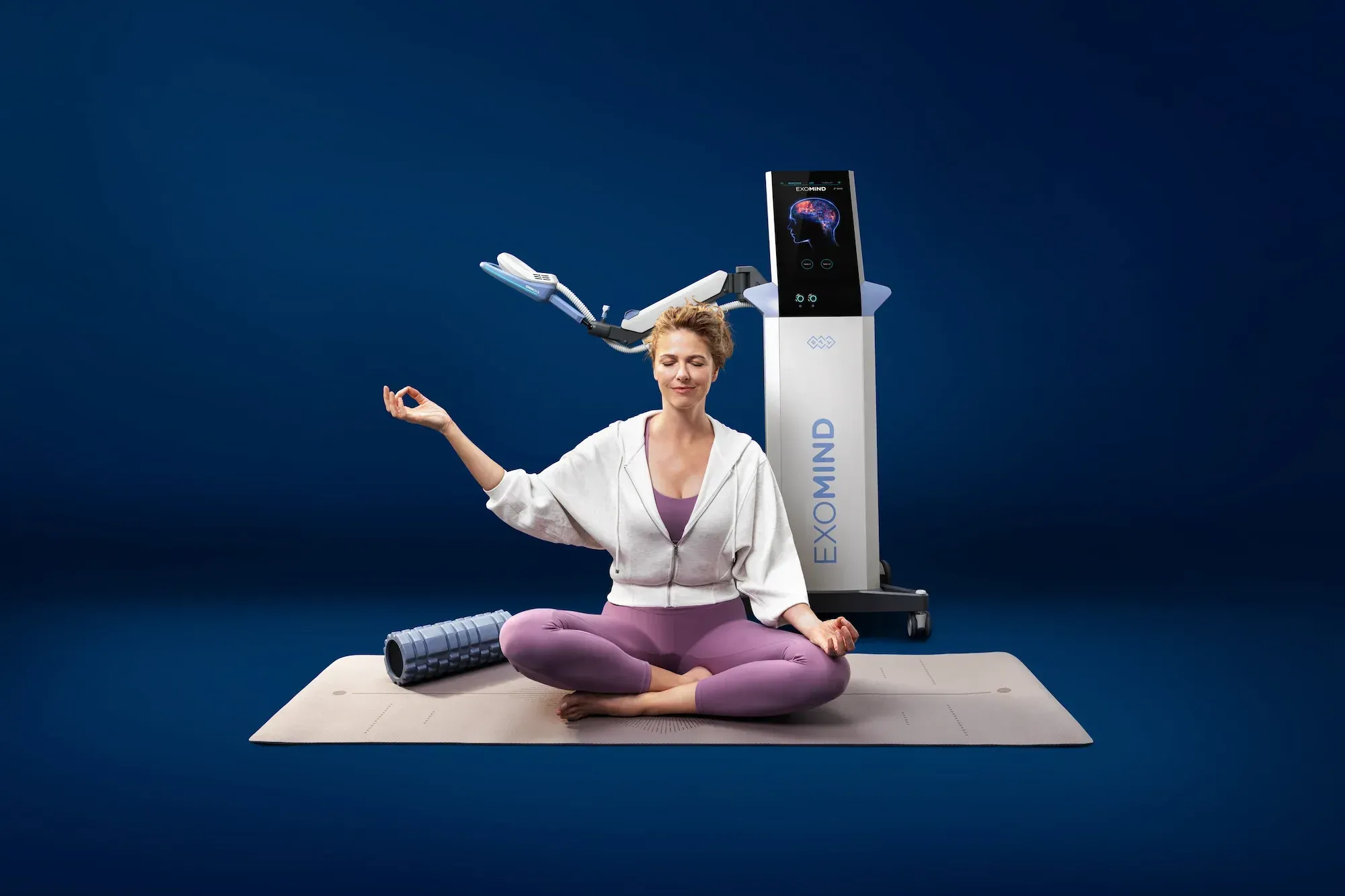
Transcranial magnetic stimulation (TMS) is a non-invasive neuromodulation technique that uses targeted magnetic pulses to stimulate specific regions of the brain. At Physicians Ketamine Institute, we use the Exomind TMS system, which represents the latest advancement in TMS technology with improved targeting precision and patient comfort.
During a TMS session, an electromagnetic coil is placed against the scalp near the forehead. The coil generates brief magnetic pulses that pass painlessly through the skull and stimulate nerve cells in the dorsolateral prefrontal cortex (DLPFC) — a brain region that is consistently underactive in patients with depression and certain other psychiatric conditions.
How TMS Works in the Brain
The magnetic pulses generated during TMS are similar in strength to those used in an MRI machine. When these pulses reach the targeted brain region, they induce small electrical currents that activate neurons. Over the course of a treatment series, this repeated stimulation helps normalize activity levels in the DLPFC and its connected circuits.
Think of it this way: if depression is partly caused by certain brain regions being "turned down," TMS gradually "turns them back up" through consistent, targeted stimulation. The effects are cumulative — most patients begin noticing improvement around weeks 3–4 of treatment, with full benefits emerging after the complete protocol.
What Conditions Does TMS Treat?
- Major depressive disorder (FDA-cleared since 2008)
- OCD (FDA-cleared since 2018)
- Anxious depression
- PTSD (significant clinical evidence, used off-label)
- Smoking cessation (FDA-cleared)
- Chronic pain (emerging evidence)
Learn more about Exomind TMS therapy at our Destin clinic.
Key Differences: Ketamine vs TMS Therapy
While both ketamine and TMS treat overlapping conditions — particularly depression and PTSD — they differ significantly in mechanism, timeline, session structure, and candidacy. Here's a detailed breakdown:
Mechanism of Action
Ketamine works pharmacologically by modulating the glutamate system and promoting rapid synaptogenesis. It's a chemical intervention that creates immediate neuroplastic changes. TMS works electromagnetically by directly stimulating underactive brain regions. It's a physical intervention that gradually normalizes neural activity patterns over time.
Speed of Relief
This is one of the most significant differences. Ketamine can produce noticeable improvement within hours to days of the first infusion. Some patients report feeling meaningfully better after a single session. TMS, by contrast, is a gradual treatment — most patients begin noticing benefits around week 3 or 4 of the protocol, with peak results at the end of the full series.
For patients in acute crisis — particularly those experiencing suicidal ideation — ketamine's rapid onset makes it the more appropriate first-line option.
Treatment Schedule
Ketamine: The standard mental health protocol involves 6 infusions over 2–3 weeks, each lasting 40–60 minutes. Maintenance boosters are scheduled every 4–8 weeks as needed.
TMS: The standard protocol involves 6–30 sessions over 3–5 weeks. Each session lasts approximately 25 minutes. Some accelerated protocols condense this timeline.
Session Experience
Ketamine: Patients typically experience altered perception during the infusion — a dreamlike, dissociative state that some describe as floating or detachment. This resolves within 15–30 minutes after the infusion ends. Patients need a driver home.
TMS: Patients are fully awake and alert throughout the session. The most common sensation is a tapping or clicking feeling on the scalp. There are no cognitive side effects, and patients can drive themselves home and return to normal activities immediately.
Comparison Table: Ketamine vs TMS
| Factor | IV Ketamine | Exomind TMS |
|---|---|---|
| Mechanism | Glutamate modulation (NMDA antagonist) | Electromagnetic brain stimulation |
| FDA Status | Off-label for depression; Spravato (esketamine) FDA-approved | FDA-cleared for depression, OCD, smoking cessation |
| Onset of Relief | Hours to days | 3–4 weeks (gradual) |
| Initial Protocol | 6 infusions over 2–3 weeks | 6-30 sessions over 3-5 weeks |
| Session Duration | 40–60 minutes | 25 minutes |
| During Treatment | Altered perception (dissociative) | Fully awake, tapping sensation |
| Drive After? | No — need a driver | Yes — no impairment |
| Conditions Treated | Depression, PTSD, anxiety, OCD, chronic pain, suicidal ideation | Depression, OCD, PTSD, anxiety, smoking cessation |
| Chronic Pain | Yes — primary indication | Emerging evidence only |
| Maintenance | Boosters every 4–8 weeks | Occasional maintenance sessions as needed |
| Insurance Coverage | Typically not covered | Covered by many insurance plans |
When Is Ketamine the Better Choice?
Ketamine may be the more appropriate treatment when:
- You need rapid relief. If you're in acute crisis, experiencing suicidal ideation, or have been suffering for a long time and need to feel better quickly, ketamine's hours-to-days onset is a critical advantage.
- You have chronic pain in addition to a mental health condition. Ketamine is uniquely effective for both psychiatric and pain conditions. If you're dealing with CRPS, fibromyalgia, neuropathic pain, or migraines alongside depression or anxiety, ketamine can address both simultaneously.
- You haven't responded to multiple medications. Ketamine works through an entirely different mechanism than SSRIs, SNRIs, and other conventional antidepressants. Patients who are truly "treatment-resistant" often respond to ketamine because it bypasses the serotonin system entirely.
- You want a shorter initial commitment. Six infusions over 2–3 weeks versus 6-30 sessions over 3-5 weeks is a meaningful difference in time investment.
- You have bipolar depression. Ketamine has shown efficacy for bipolar depression, while TMS evidence for bipolar disorder is more limited.
Learn more about ketamine for mental health conditions.
When Is TMS the Better Choice?
TMS may be the more appropriate treatment when:
- You prefer a non-pharmacological approach. TMS doesn't introduce any medication into your body. If you're sensitive to medications, concerned about side effects, or simply prefer a drug-free treatment, TMS is an excellent option.
- You want to maintain your normal routine. Because TMS has no cognitive side effects and doesn't require a driver, you can schedule sessions during a lunch break and return to work immediately. This makes it far more compatible with a busy schedule.
- You have OCD as a primary diagnosis. TMS is FDA-cleared specifically for OCD, and the deep TMS protocols for OCD target different brain regions than those used for depression.
- Insurance coverage matters. Many insurance plans now cover TMS for treatment-resistant depression, making it significantly more affordable for some patients.
- You want long-lasting results with less maintenance. Some studies suggest that TMS effects may last longer between maintenance sessions compared to ketamine, though individual results vary.
- You're uncomfortable with altered states of consciousness. If the dissociative effects of ketamine are a concern for you, TMS offers a completely lucid treatment experience.
Learn more about Exomind TMS therapy at Physicians Ketamine Institute.
Can You Combine Ketamine and TMS?
Yes — and at Physicians Ketamine Institute, we sometimes recommend a combined approach for patients who may benefit from both modalities. Here's why combining them can make sense:
- Ketamine for acute stabilization, TMS for long-term maintenance. A patient in crisis can begin with a series of ketamine infusions to achieve rapid symptom relief, then transition to TMS for sustained, long-term improvement. This "bridge" approach gives you immediate relief while building durable neural circuit changes through TMS.
- Complementary mechanisms. Because ketamine and TMS work through completely different pathways — chemical vs. electromagnetic — their effects may be additive. Ketamine promotes rapid synaptogenesis while TMS normalizes activity in specific brain regions. Together, they address both the chemical and circuit-level components of treatment-resistant conditions.
- Different conditions, same patient. A patient dealing with both depression and OCD might benefit from ketamine for the depressive symptoms and TMS (with its FDA-cleared OCD protocol) for the obsessive-compulsive symptoms.
Dr. Barnett can help determine whether a combined protocol is appropriate during your initial consultation.
How to Decide: Questions to Ask Yourself
As you weigh your options, consider these questions:
- How urgently do I need relief? If you're in crisis, ketamine's rapid onset matters. If you can invest 6–9 weeks, TMS may be sufficient.
- Do I have chronic pain? If yes, ketamine is likely the better starting point since it treats both pain and psychiatric conditions.
- How do I feel about altered states of consciousness? Ketamine produces a temporary dissociative experience. TMS does not.
- What does my schedule look like? TMS requires more frequent sessions (5x/week initially) but with no downtime. Ketamine requires fewer sessions but needs a driver and recovery time.
- What has my insurance approved? TMS is more commonly covered by insurance than ketamine.
- What have I already tried? If you've failed multiple antidepressants, both are good options. If you've failed antidepressants AND TMS, ketamine may be your next step.
Why Physicians Ketamine Institute Is Uniquely Positioned to Help
Most clinics offer either ketamine or TMS — but not both. This creates an inherent bias: a ketamine-only clinic will always recommend ketamine, and a TMS-only clinic will always recommend TMS.
At Physicians Ketamine Institute of Destin, we offer both IV ketamine therapy and Exomind TMS therapy because we believe patients deserve an honest, objective recommendation based on their specific diagnosis, treatment history, and goals — not based on what a clinic happens to have available.
Dr. Megan Barnett brings over 15 years of anesthesiology experience (including military service), advanced ketamine certification through the Integrative Psychiatry Institute, and membership in the American Society of Ketamine Physicians (ASKP). She evaluates every patient individually and will recommend the treatment — or combination of treatments — that gives you the best chance of meaningful, lasting improvement.
Frequently Asked Questions
Is ketamine or TMS better for depression?
Both are effective for treatment-resistant depression, but they work differently. Ketamine provides rapid relief (often within hours to days), making it ideal for severe or acute depression. TMS produces gradual improvement over 3–5 weeks and is FDA-cleared for depression with strong long-term data. At Physicians Ketamine Institute of Destin, we help you choose based on the severity of your symptoms, how quickly you need relief, and your treatment history.
Can you do ketamine and TMS at the same time?
Yes. Some patients benefit from starting with ketamine infusions for rapid stabilization and then transitioning to TMS for long-term maintenance. Because the two treatments work through completely different mechanisms, their effects can be complementary. Dr. Barnett can determine whether a combined approach is appropriate for your situation.
How fast does ketamine work compared to TMS?
Ketamine typically produces noticeable improvement within hours to days of the first infusion. TMS is a gradual treatment — most patients begin noticing benefits around week 3 or 4, with full results at the end of the 6–9 week protocol. If rapid relief is a priority, ketamine has a significant advantage in onset speed.
Is TMS therapy covered by insurance?
Many insurance plans now cover TMS therapy for treatment-resistant depression (typically defined as failure of at least two antidepressant medications). Coverage for OCD is also expanding. Ketamine infusions are generally not covered by insurance. Our team at Physicians Ketamine Institute can help you verify your TMS coverage before treatment begins.
Does ketamine therapy have more side effects than TMS?
Ketamine produces temporary dissociative effects during the infusion (lasting about 15–30 minutes after treatment ends), along with possible mild nausea, dizziness, and elevated blood pressure. These are monitored and managed by Dr. Barnett during every session. TMS side effects are minimal — the most common is mild scalp discomfort or a tapping sensation during treatment. Neither treatment has significant long-term side effects when administered properly.
How long do the effects of ketamine last compared to TMS?
After a full initial series, ketamine effects typically last 4–8 weeks before a booster may be needed. TMS effects are generally longer-lasting — many patients experience sustained improvement for 6–12 months or longer after completing the full protocol. However, individual responses vary significantly, and maintenance schedules are tailored to each patient.
Can TMS treat chronic pain like ketamine does?
Currently, ketamine is far more established for chronic pain conditions including CRPS, fibromyalgia, neuropathic pain, and migraines. TMS research for pain is emerging but not yet robust enough for it to be a primary pain treatment. If chronic pain is a significant part of your condition, ketamine for chronic pain is likely the better starting point.
What if I've tried TMS and it didn't work?
TMS non-responders may still respond to ketamine because the two treatments work through entirely different neurobiological pathways. Ketamine targets the glutamate system while TMS works through electromagnetic stimulation of brain circuits. Many patients who didn't achieve adequate results with TMS have found significant relief with IV ketamine at our clinic.
Do I need a referral for ketamine or TMS therapy?
You do not need a referral to schedule a consultation at Physicians Ketamine Institute of Destin. However, Dr. Barnett will review your psychiatric and medical history, current medications, and previous treatment trials to determine which therapy is most appropriate. Some insurance plans may require a referral for TMS coverage — our team can guide you through this process.
How do I know which treatment is right for me?
The best way to determine whether ketamine, TMS, or a combination is right for you is to schedule a consultation with Dr. Barnett. She will evaluate your diagnosis, treatment history, symptom severity, and personal preferences to create an individualized treatment recommendation. Because we offer both modalities, our recommendation is based entirely on what's best for you — not on what we have available.
Take the Next Step
If you've been struggling with depression, anxiety, PTSD, or OCD and want to understand whether ketamine or TMS is the right treatment for you, we're here to help. Schedule a consultation at Physicians Ketamine Institute of Destin, FL, and let Dr. Barnett guide you toward the treatment that offers the best path to relief.
Call us at (850) 598-0099 or book your consultation online.