


Patient receiving ketamine infusion for CRPS at Physicians Ketamine Institute of Destin

CRPS (Complex Regional Pain Syndrome) Treatment in Destin, FL

Reclaim Your Life from Chronic Pain

Common In:Adults 25-55
Primary Causes:Nerve Injury, Trauma, Surgery
Treatment Time:40-60 minutes per infusion
Results:Often within 1-3 infusions
Educational illustration of complex regional pain syndrome at Physicians Ketamine Institute of Destin

What Is CRPS?

Recognizing the Signs

Complex Regional Pain Syndrome (CRPS), formerly known as Reflex Sympathetic Dystrophy (RSD), is a chronic neurological condition characterized by severe, persistent pain that is disproportionate to the initial injury. CRPS involves dysfunction of the central and peripheral nervous systems, leading to amplified pain signaling and widespread inflammatory responses.

When you experience CRPS, even the lightest touch on your affected limb can trigger excruciating, burning pain. Everyday activities like wearing clothing, feeling a breeze, or being touched by a bedsheet become sources of intense discomfort that others may struggle to understand.

Many patients describe feeling trapped by their own body, as the unpredictable nature of CRPS flare-ups makes planning daily activities nearly impossible. The invisible nature of this condition often leads to frustration when others cannot see the severity of what you are enduring.

Illustration of nervous system pain pathways at Physicians Ketamine Institute of Destin

Why CRPS Happens

Understanding the Root Causes

CRPS develops when the nervous system enters a state of central sensitization, a process in which pain-processing neurons in the spinal cord and brain become hyperexcitable. Research indicates that approximately 5-7% of patients who experience limb fractures or surgery develop CRPS, with the condition occurring up to four times more frequently in women than men.

This central sensitization creates a feedback loop in which NMDA receptors in the spinal cord remain chronically activated, amplifying pain signals far beyond what the original injury would produce. Inflammation markers including cytokines and substance P flood the affected area, causing the characteristic swelling, color changes, and temperature asymmetry between limbs.

The sympathetic nervous system, which normally regulates blood flow and sweat production, becomes dysregulated in CRPS. This autonomic dysfunction explains why the affected limb may alternate between hot and cold, appear red or blue, and produce excessive or diminished sweating compared to the unaffected side.

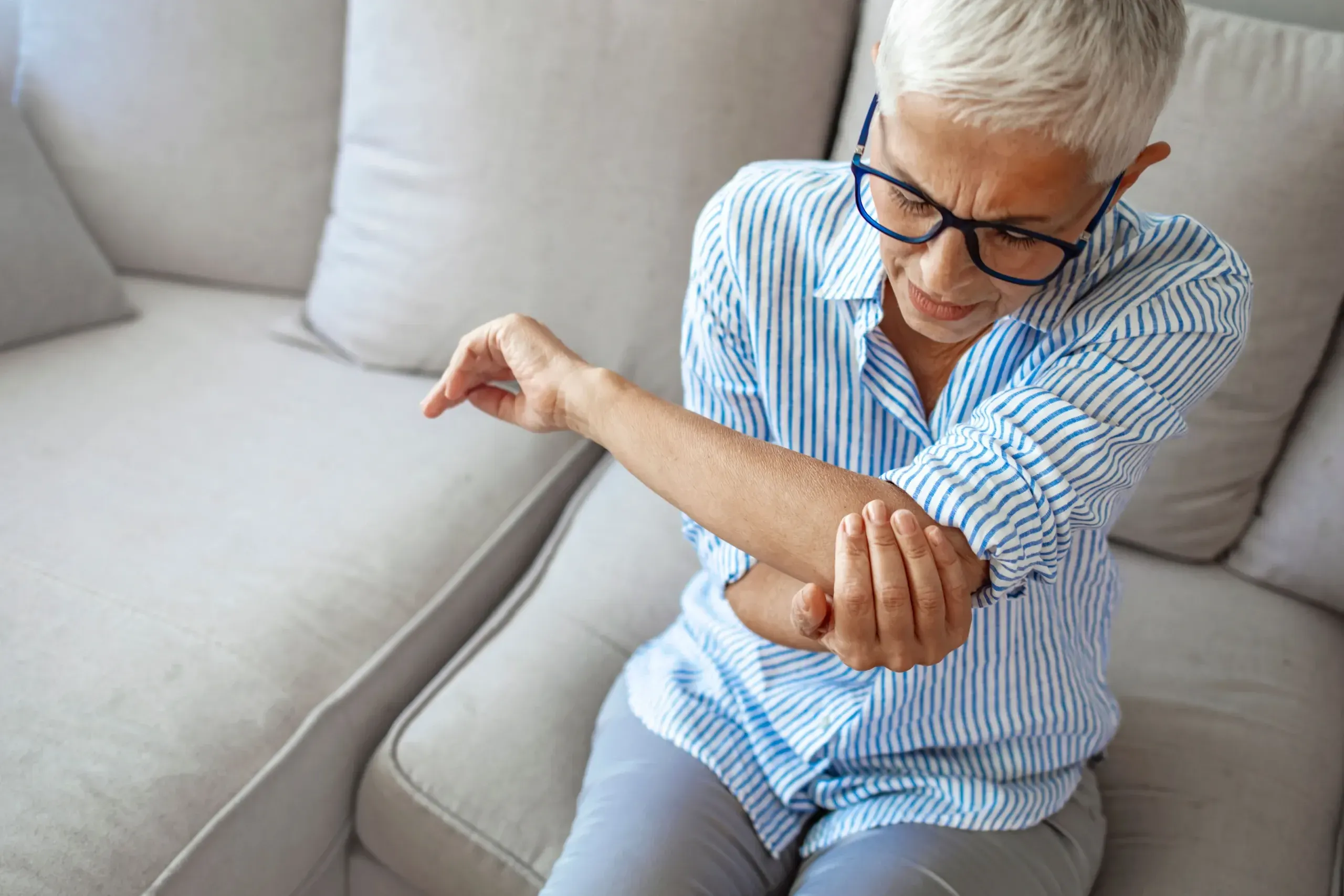
Diagram showing NMDA receptor activity in CRPS at Physicians Ketamine Institute of Destin

NMDA Receptors & Central Sensitization

How Pain Signals Become Amplified

At the molecular level, CRPS involves chronic activation of N-methyl-D-aspartate (NMDA) receptors in the dorsal horn of the spinal cord. These receptors normally help regulate pain signaling, but in CRPS they become persistently activated, creating a state called wind-up in which each successive pain signal produces a stronger response than the last.

This NMDA receptor hyperactivation drives neuroplastic changes in the brain itself. Functional MRI studies have shown that CRPS patients develop reorganized cortical maps, with the brain's representation of the affected limb shrinking while pain-processing regions expand. These structural brain changes help explain why the pain persists long after the original tissue injury has healed.

Neuroinflammation compounds the problem as activated glial cells in the central nervous system release pro-inflammatory mediators that further sensitize pain pathways. This creates a self-sustaining cycle in which inflammation drives sensitization, and sensitization promotes further inflammation, making traditional pain medications increasingly ineffective over time.

Risk factors contributing to CRPS at Physicians Ketamine Institute of Destin

What Triggers CRPS?

Identifying Your Risk Factors

01

Limb Fractures

Fractures are the most common CRPS trigger, with wrist and ankle fractures accounting for approximately 40-50% of cases due to associated nerve and tissue damage.

02

Surgical Trauma

Orthopedic and soft tissue surgeries can trigger CRPS when nerve fibers are compressed, stretched, or inadvertently damaged during the procedure.

03

Soft Tissue Injuries

Sprains, crush injuries, and deep tissue bruising can initiate CRPS by disrupting local nerve function and triggering prolonged inflammatory responses.

04

Nerve Compression

Conditions like carpal tunnel syndrome or other entrapment neuropathies can serve as a precursor, particularly when nerve irritation becomes chronic.

05

Immobilization

Extended casting or splinting after injury may contribute to CRPS development by promoting disuse changes and altered blood flow patterns in the affected limb.

Physicians Ketamine Institute of Destin clinic interior in Destin Florida

Why Choose Physicians Ketamine Institute

Expert Care in Destin

  • Board-Certified Anesthesiologist
  • Physician-Led Infusions
  • Personalized Pain Protocols
  • Evidence-Based Approach

Treatment Options for CRPS

Finding Your Best Approach

Treatment Best For Session Time Results Timeline Maintenance
Ketamine for Chronic Pain Severe CRPS pain relief 4 hours Within 1-3 infusions As needed series
Sphenopalatine Ganglion Blocks Autonomic nerve modulation 15-30 minutes Within days Periodic boosters
Patient concerned about chronic pain symptoms at Physicians Ketamine Institute of Destin

You May Be Experiencing CRPS If...

Recognizing When to Seek Help

  • Burning or Throbbing Pain
  • Extreme Touch Sensitivity
  • Temperature Changes
  • Swelling and Color Changes
  • Decreased Range of Motion
  • Spreading Pain

Frequently Asked Questions

About CRPS

01 How does ketamine treat CRPS?

Ketamine works by blocking NMDA receptors in the central nervous system, which are key drivers of the central sensitization that sustains CRPS pain. By resetting these overactive pain pathways, ketamine infusions can provide significant relief where other treatments have failed.

02 How many ketamine infusions do I need for CRPS?

Most CRPS patients begin with a series of 4-6 infusions over 2-3 weeks. Many patients experience meaningful pain reduction within the first 1-3 sessions. Dr. Barnett tailors the number and frequency based on your individual response.

03 How long does CRPS relief last after ketamine treatment?

Relief duration varies, but many patients report weeks to months of reduced pain following a ketamine infusion series. Booster infusions can be scheduled as needed to maintain pain control and prevent symptom escalation.

04 Is ketamine the best treatment for CRPS?

Ketamine has emerged as one of the most promising treatments for CRPS, particularly for patients who have not responded to conventional therapies. Research supports its ability to address the underlying NMDA receptor dysfunction that drives CRPS pain.

05 What is the difference between CRPS and RSD?

CRPS and RSD (Reflex Sympathetic Dystrophy) refer to the same condition. RSD was the older terminology, now replaced by CRPS Type I (without confirmed nerve injury) and CRPS Type II (with confirmed nerve injury, formerly called causalgia).

06 Can CRPS spread to other parts of the body?

Yes, CRPS can spread beyond the initial site. In some patients, pain and symptoms extend to other areas of the same limb or even the opposite limb. Early intervention with treatments like ketamine infusions may help prevent this progression.

07 What can I do at home to manage CRPS between treatments?

Gentle movement, mirror therapy, stress management, and consistent sleep hygiene can support your treatment plan. Dr. Barnett provides personalized guidance on complementary strategies during your consultation at our Destin clinic.

Location1241 Airport Rd, Suite A
Destin, FL, 32541

Schedule Your Consultation

Scientific References