
Initial Mapping
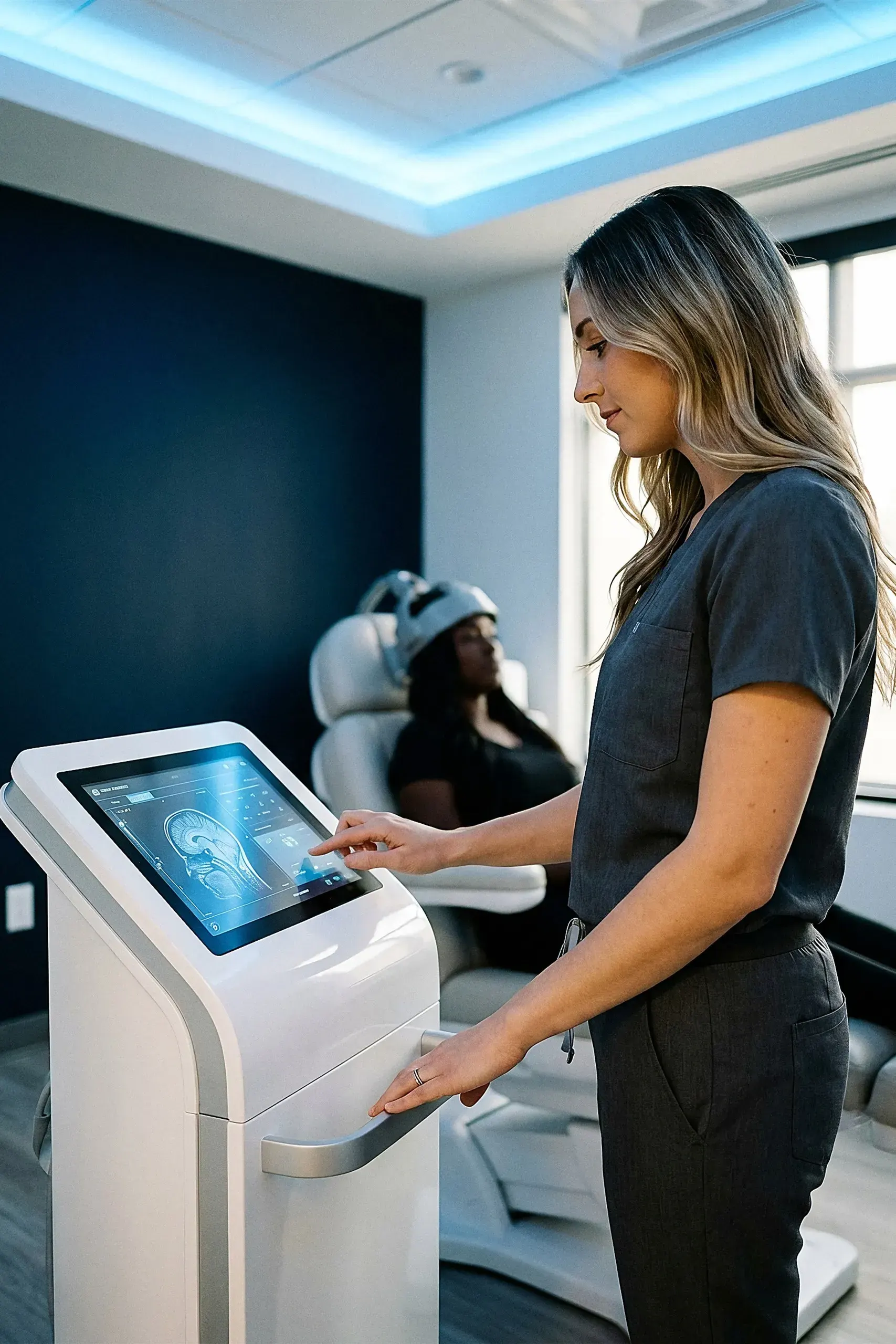
Your first session is the longest. We locate your motor threshold and map the exact treatment spot on your scalp, and every session after that uses your personal coordinates.
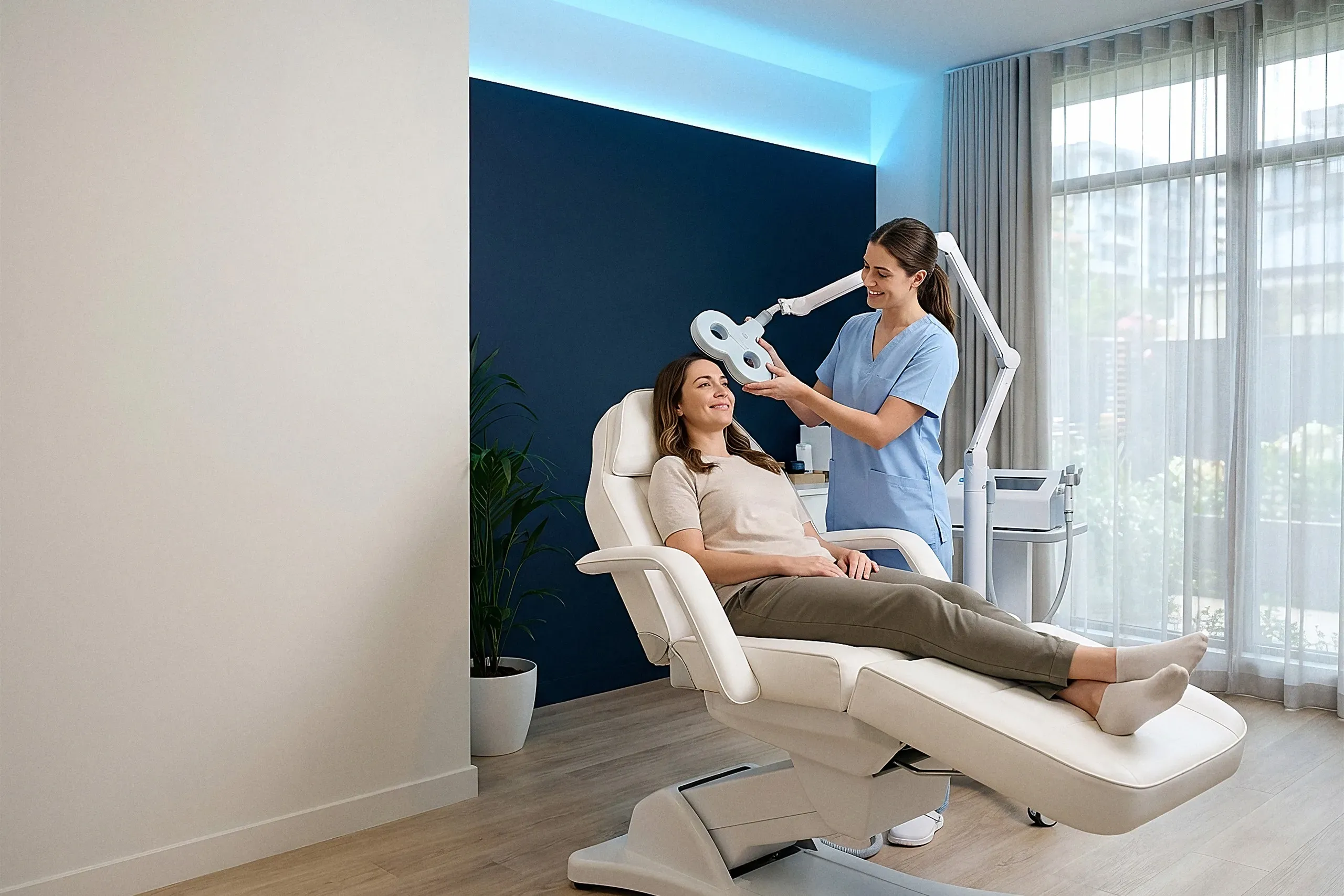
FDA-cleared transcranial magnetic stimulation for depression, drug-free and non-invasive, covered by most major insurance plans.
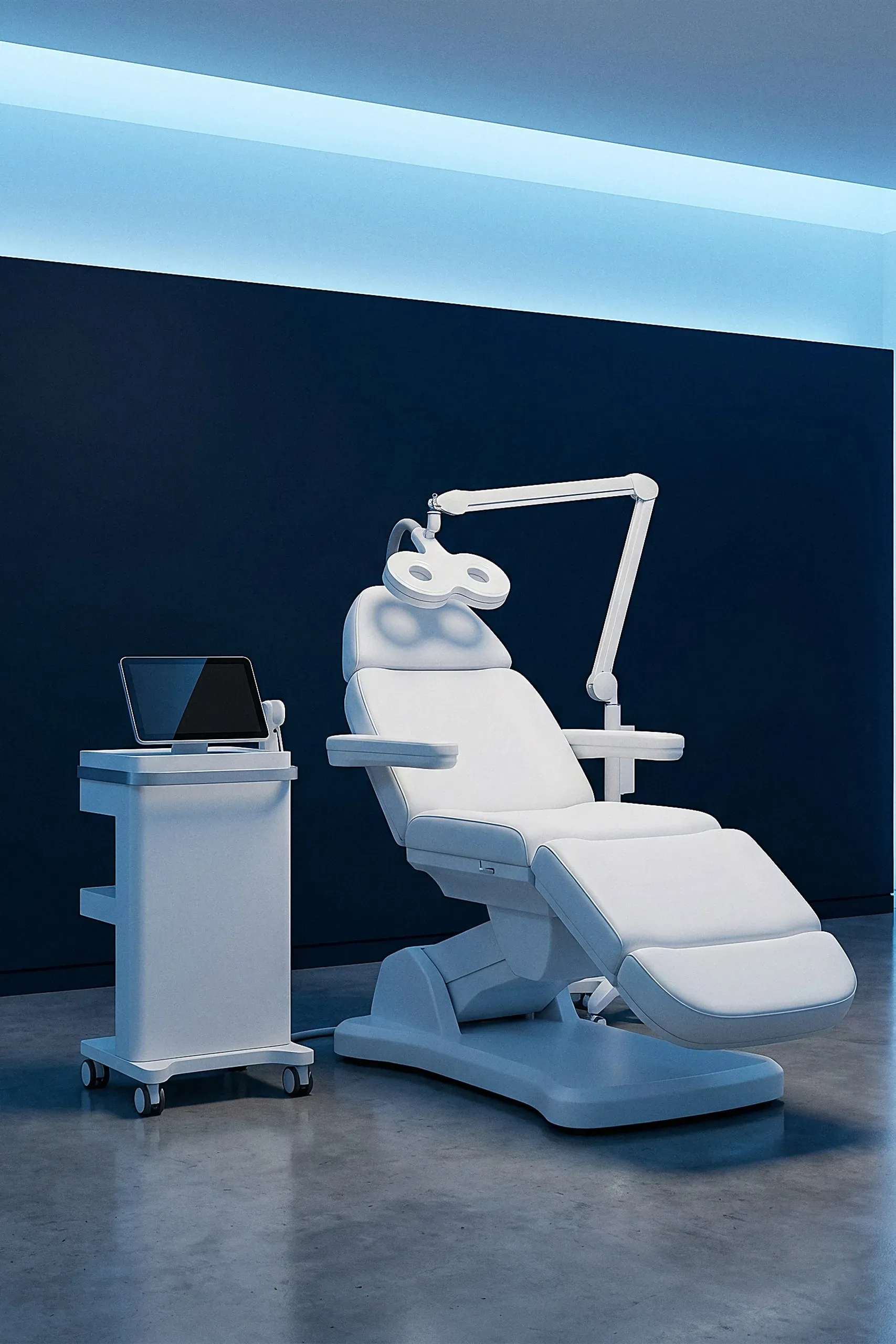
Understanding Treatment-Resistant Depression
Antidepressants help many people, but they do not help everyone. About one in three patients with major depression gets little or no lasting relief even after multiple medication trials, each of which can take six to eight weeks to evaluate. Years can pass in that cycle, and side effects like weight change, fatigue, and emotional blunting often make it harder to stay the course.
This is the situation TMS was built for. Because it stimulates the brain directly instead of circulating a drug through your whole body, it works through an entirely different mechanism than the medications that have already fallen short. It is also the point at which most insurance plans begin covering TMS: typically after two to four adequate antidepressant trials, a history our team helps you document so that coverage is in place before your first session.

The Science of Magnetic Brain Stimulation
Transcranial magnetic stimulation, or TMS, is a non-invasive brain stimulation treatment cleared by the FDA for major depressive disorder since 2008. During a session, an electromagnetic coil rests against your scalp and delivers brief, focused magnetic pulses, similar in strength to an MRI, to the dorsolateral prefrontal cortex, a region that becomes underactive in depression. Those pulses induce tiny electrical currents that reawaken the circuit, and with repeated sessions, the brain relearns healthier activity patterns in the networks that regulate mood.
You remain fully awake and alert the entire time. There is no anesthesia, no sedation, and no memory effect. You sit in a comfortable chair, most patients read or listen to music, and you drive yourself home afterward. TMS is one of two neuromodulation options we offer: for patients interested in a shorter, wellness-focused protocol outside the insurance pathway, we also offer Exomind TMS, and we explain the difference honestly during your consultation.

Drug-Free, Covered, Evidence-Based
Most major plans cover TMS, including Medicare and Tricare, and we manage prior authorization
Cleared for depression since 2008, with a safety record built over nearly two decades
No anesthesia, no sedation, no systemic medication. You are awake through every session
Nothing enters your bloodstream, so no weight gain, sexual dysfunction, or emotional flatness
Most patients who respond maintain their improvement for a year or longer after the course
You drive yourself home and return directly to work and normal activities
Compare Your Options
| Treatment | Mechanism | Time | Results | Duration | Downtime | Best For |
|---|---|---|---|---|---|---|
| TMS Therapy | Magnetic brain stimulation | 20-40 minutes | Weeks 2 to 4 | 12 months or longer | None | Drug-free, insurance-covered treatment for diagnosed depression |
| Exomind TMS | Magnetic brain stimulation, express protocol | About 25 minutes | 3 to 5 weeks | 6 to 12 months | None | Shorter wellness-focused protocol outside the insurance pathway |
| Spravato (Esketamine) | NMDA receptor modulation, nasal spray | About 2.5 hours per visit | Hours to days | Maintenance every 1-2 weeks | 2-hour observation, no driving | Insurance-covered, fast-acting treatment-resistant depression care |
| IV Ketamine | NMDA receptor modulation, full molecule | 40-60 minutes | Hours to days | Maintenance every 3-6 weeks | 30-45 min recovery, no driving | Individualized dosing and chronic pain conditions |
| Oral Antidepressants | Serotonin and norepinephrine reuptake | Daily at home | 4-8 weeks | Ongoing daily use | None | First and second-line treatment for depression |

Candidacy and Safety Considerations
TMS is designed for adults whose depression has not responded to antidepressant medication, or who cannot tolerate the side effects. Dr. Barnett screens every patient history before treatment is scheduled.
Every patient is screened for these factors and medically cleared before a first session is scheduled.
Your first session is the longest. We locate your motor threshold and map the exact treatment spot on your scalp, and every session after that uses your personal coordinates.
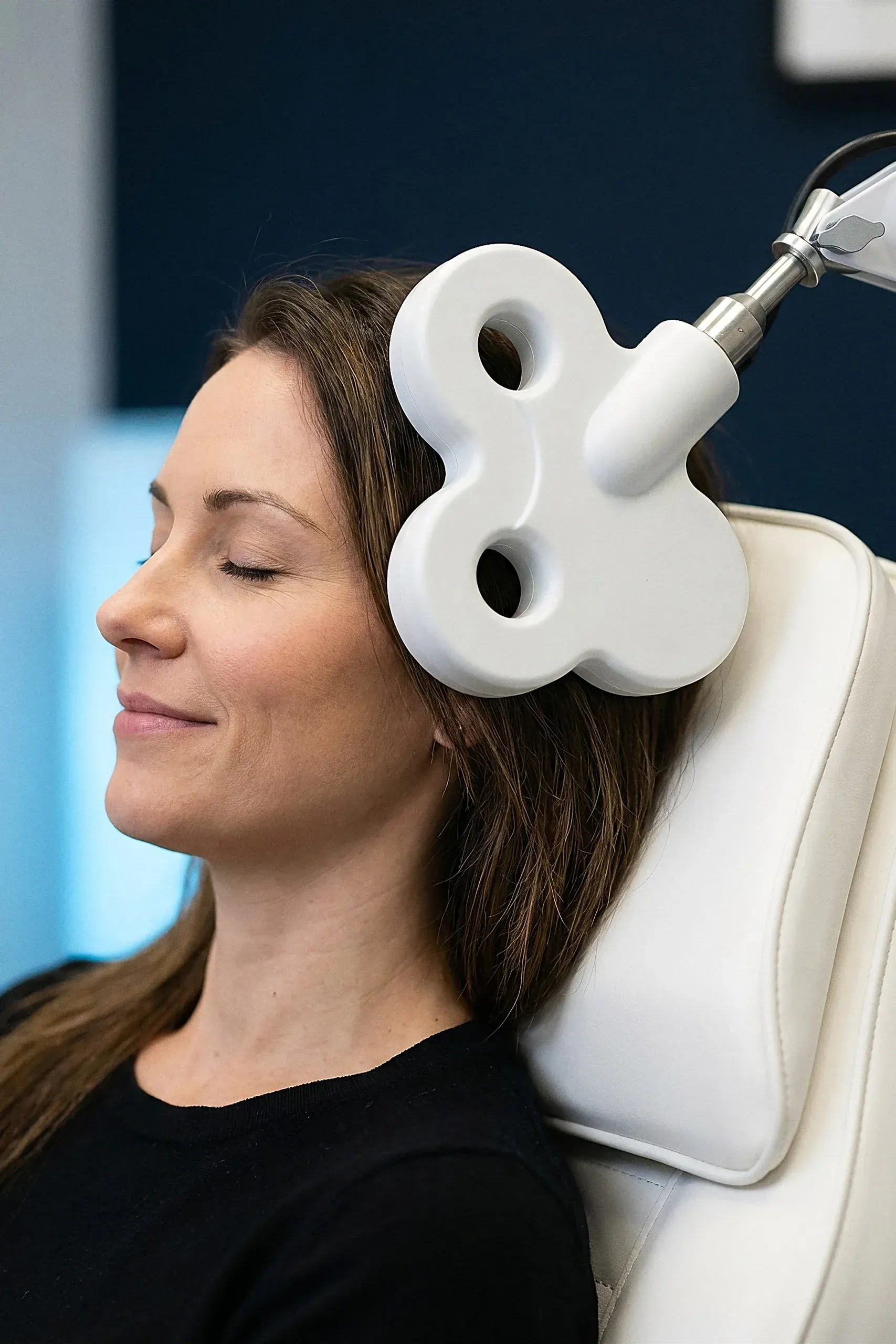
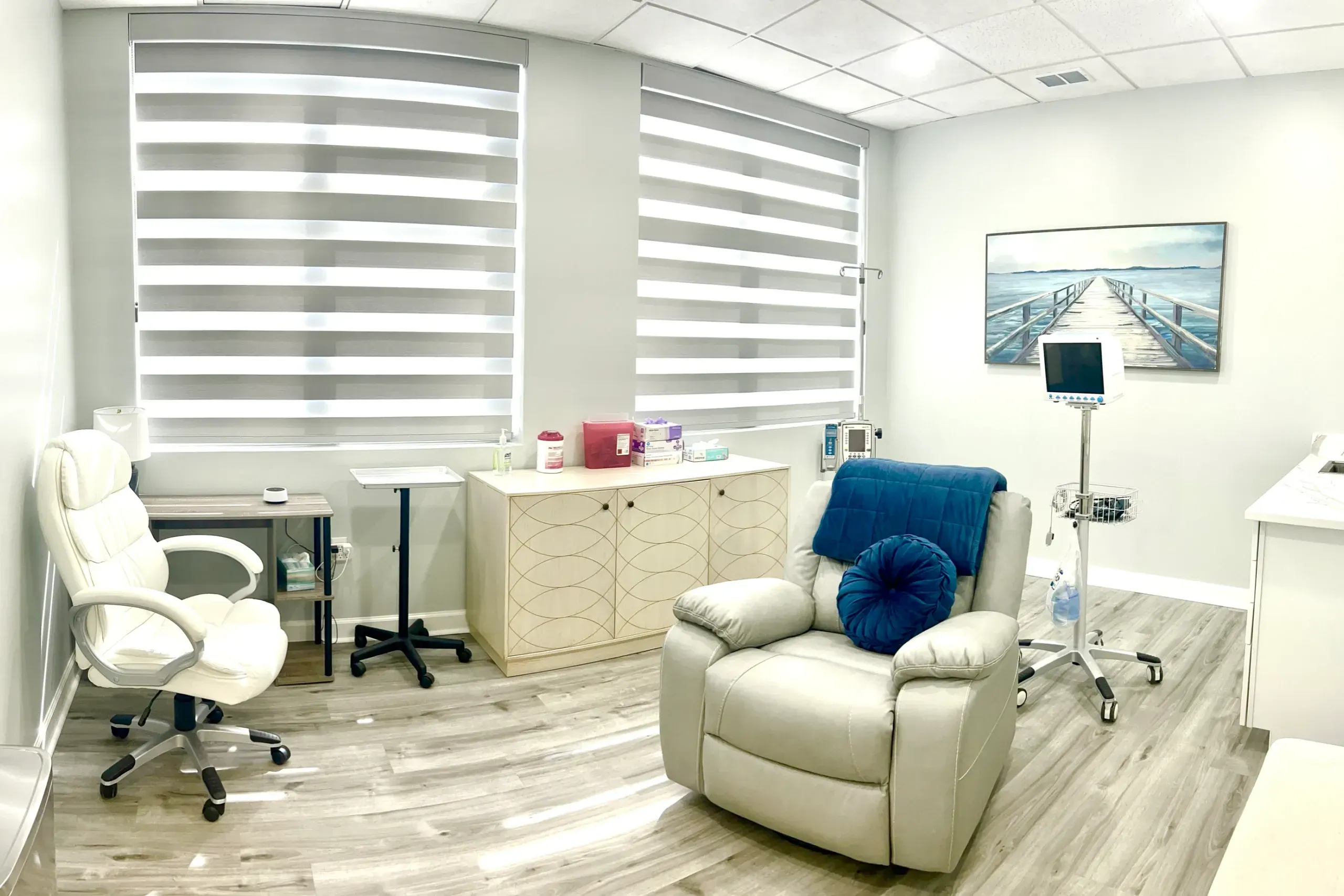
At each visit, you settle into the treatment chair and the magnetic coil is positioned against your head at your mapped location. Setup takes only a few minutes.
The coil delivers rhythmic pulse trains, which most patients describe as a firm tapping on the scalp. You are awake and can talk, read, or listen to music.
There is no recovery period. You return directly to work and driving, and we track your progress with standardized mood measures throughout the course.
What to Know
TMS has one of the lightest side-effect profiles in psychiatry because nothing enters your bloodstream. There are no effects on memory or thinking, and no systemic side effects at all.
The common effects typically fade as your body adjusts over the first few sessions. Our screening process is designed to identify anyone at elevated seizure risk before treatment begins, and ear protection is provided at every session. There is no recovery period and no restriction on driving.
Because TMS is insurance-covered, most patients pay a per-session copay rather than the full cash price of treatment. Your exact cost depends on your plan, your deductible, and the number of sessions your protocol requires, and we give you a clear estimate before you begin.
TMS therapy is covered by many major insurance plans for treatment-resistant depression, including Medicare, Tricare, Blue Cross Blue Shield, Aetna, and UnitedHealthcare. Our team will verify your insurance benefits, manage the prior authorization process, and help determine your out-of-pocket costs before treatment begins.
Physicians Ketamine Institute of Destin is a VA Community Care Partner, so eligible veterans may receive coverage through the VA healthcare system. We also accept Health Savings Account (HSA) and Flexible Spending Account (FSA) payments, and self-pay options are available for patients whose plans do not cover TMS. Call us at (850) 598-0099 with any coverage questions.
Physician-Led Neuromodulation on the Emerald Coast
Dr. Barnett, a board-certified anesthesiologist, directs your treatment from mapping onward
TMS, Spravato, and IV ketamine together, with your history and care team intact throughout
Dr. Barnett is a former active-duty Air Force anesthesiologist. We work with Tricare and the VA
Benefits verification, prior authorization, and documentation of prior medication trials
Answers to Your Questions
Yes. Most major insurance plans, including Medicare, Tricare, Blue Cross Blue Shield, Aetna, and UnitedHealthcare, cover TMS for treatment-resistant depression, typically after two to four antidepressant trials. Our team verifies your benefits and handles the paperwork before you start.
With insurance, most patients pay a per-session copay rather than the cash price. Your total depends on your plan and protocol length, and we provide a written estimate after verifying your benefits. Self-pay options exist for uncovered patients.
The standard course is about 36 sessions: five per week for six to seven weeks, then a short taper. Most patients notice improvement between weeks two and four.
Most patients feel a firm tapping on the scalp and some mild discomfort in the first sessions, which fades quickly. There is no sedation and no downtime, and you drive yourself home.
Traditional TMS is the full FDA-cleared, insurance-covered protocol for diagnosed depression. Exomind is our express, wellness-focused magnetic stimulation option outside the insurance pathway. We explain both at your consultation and help you choose.
They work through different mechanisms and suit different situations. TMS is drug-free and insurance-covered, while ketamine and Spravato act faster through a medication-based route. Our guide to ketamine vs. TMS covers the decision in depth, and your consultation settles it for your specific case.